The easiest Friendsgiving ideas fall into three plans: a potluck at home where everyone brings one dish, a hosted dinner where you cook the main and guests fill the gaps, or a booked table at a restaurant with a set menu and an agreed way to split the bill. Pick the plan that fits your space, budget and group size, set a date, and assign dishes or confirm numbers early. Thanksgiving is Thursday, 26 November 2026, so most groups pick a weekend before or after it.
Key takeaways
- Choose one of three plans: potluck, host-led dinner at home, or a restaurant booking.
- Use a sign-up list so you do not end up with five desserts and no vegetables.
- Ask about allergies and dietary needs when you invite, not on the day.
- For a restaurant, book early, ask about set menus and agree how to split the bill before anyone orders.
- Follow the two-hour rule for food left out at room temperature.
What Friendsgiving is, and when to hold it
Friendsgiving is a Thanksgiving-style meal shared with friends rather than (or as well as) family. NPR’s Friendsgiving 101 (republished by KPBS) notes that Merriam-Webster began tracking the word in 2007, after it appeared on Twitter and Usenet, and added it to the dictionary in 2020. The same report says there are no official participation figures, though recent online surveys suggest it may be as high as 20% of Americans.
Because many guests spend Thanksgiving Day itself with family, Friendsgiving usually happens on a different day. In 2026 the weekend of 21 to 22 November is the obvious choice, with the weekend after Thanksgiving as a fallback for groups that want to use leftovers or travel less.
Three Friendsgiving plans compared
Most groups end up with one of these three formats. The table sets out the trade-offs.
| Potluck at home | Host-led dinner | Restaurant booking | |
|---|---|---|---|
| Best for | Groups of 8 to 20, mixed budgets | Small groups, a keen cook | Small flats, busy hosts, mixed diets |
| Cost | Low; each guest pays for one dish | Higher for the host unless guests chip in | Highest; per-head price plus tax and tip |
| Host workload | Moderate: space, plates, coordination | Heavy: shopping, cooking, cleaning | Light: booking and the bill |
| Main risk | Duplicate dishes, food left out too long | Host burnout | Bill disputes, limited menu choice |
| Key tool | A shared sign-up sheet | A timed cooking plan | An early booking and a set menu |
Plan 1: A potluck Friendsgiving at home
A potluck spreads the cost and the cooking. The Emily Post Institute’s advice on casual parties makes the key point for hosts: unless the party is both a potluck and bring-your-own drinks, make sure you have enough food and drink for everyone.
Set up a sign-up sheet. A shared spreadsheet or group chat works fine. List categories with a number of slots in each:
- Main: usually the host, as it needs the oven longest.
- Sides (4 to 6 slots): potatoes, stuffing, a green vegetable, a roasted vegetable, a grain or salad, gravy.
- Bread and butter (1 slot).
- Desserts (2 slots): limit these, or you will have far too many.
- Drinks and ice (2 slots).
- Non-food (1 to 2 slots): napkins, foil containers for leftovers, serving spoons.
Ask each guest to add their dietary needs next to their name. That way everyone can see which dishes are vegetarian, gluten-free or nut-free, and you can fill gaps before the day.
The NPR guide adds some practical potluck tips: ask out-of-town guests to bring shop-bought items such as drinks or napkins, ask guests to bring dishes that are ready to eat because kitchen space is limited, and give people small jobs so the host is not doing everything.
Plan 2: Hosting Friendsgiving yourself
If you enjoy cooking, you might prefer to make the main and most of the sides. Keep it manageable:
- Rethink the turkey. NPR’s tips point out the main does not have to be a whole bird. A turkey breast or leg, shepherd’s pie, a savoury galette or lasagne all work.
- Cook ahead. Cranberry sauce, gravy base, pie and many casseroles can be made a day early.
- Let guests contribute. Even at a hosted dinner, it is fine to ask people to bring drinks or a dessert.
- Share the details early. Tell guests the meal time and dress code in advance, as the NPR guide suggests.
Seating matters for a long meal. Our guide to family-style dining vs individual plates can help you decide whether to pass dishes round the table or serve from the kitchen.
Plan 3: Booking Friendsgiving at a restaurant
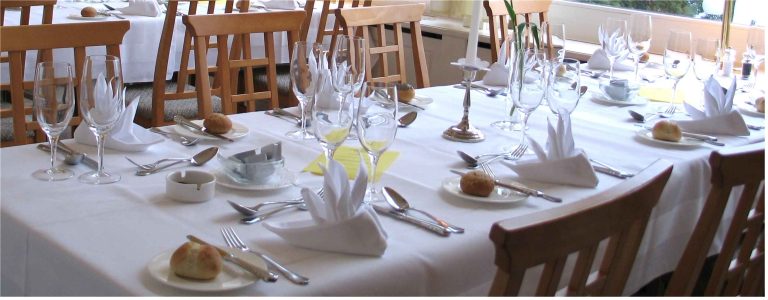
A restaurant takes cooking and washing up off the table, which suits groups without a big kitchen. The trade-off is cost and less flexibility.
How to book a group table
- Book early. Late November weekends are busy, and large tables go first. Aim for three to four weeks ahead.
- Give a realistic number. Ask how late you can change it, and whether there is a deposit or cancellation fee.
- Ask about set menus. Many restaurants require a set or pre-order menu for large groups. This keeps the kitchen on time and makes the bill predictable.
- Share dietary needs in advance. Collect them when you invite people and pass them on when you book.
- Check service charges. Some restaurants add an automatic gratuity for larger parties. Ask when you book so it is not a surprise.
Our step-by-step guide on how to book a large group reservation covers deposits and timing in more detail, and our group pre-order menu checklist explains how to collect everyone’s choices.
Splitting the bill without awkwardness
Money is the most common source of friction at a group meal. CNBC’s round-up of etiquette experts’ advice on splitting the bill gives a few clear rules:
- Agree before ordering. Daniel Post Senning of the Emily Post Institute says to raise it early: “Sooner is better.”
- Speak to the server directly about which items you are paying for, rather than debating it at the table.
- Include tax and tip in your share, so the person who pays is not left short.
- Repay quickly. If one person pays and collects by payment app, send your share straight away.
A set menu at a fixed price per head makes this much easier, because everyone’s food costs the same. Drinks can then be settled separately.
Friendsgiving food ideas
Beyond the classics, a few crowd-pleasers suit sharing:
- Mains: roast turkey breast, a glazed ham, a mushroom and chestnut pie for vegetarians, or a big tray of lasagne.
- Sides: mashed potatoes, sweet potato bake, roasted Brussels sprouts, green beans, stuffing baked in a tray, mac and cheese.
- Salads: a kale or grain salad gives some freshness against richer dishes.
- Desserts: pumpkin pie, apple crumble, pecan bars that are easy to cut and share.
- Drinks: a batch drink in a jug, sparkling water and at least one non-alcoholic option.
Keeping shared food safe
Potlucks mean dishes sit out for hours. The FDA’s guidance on serving safe buffets says hot foods should be kept at 140°F or warmer and cold foods at 40°F or colder. Discard perishables left at room temperature for more than two hours (one hour if the room is above 90°F). It also advises swapping in fresh platters rather than topping up dishes that have been out. The USDA says leftovers should be eaten within four days or frozen, and reheated to 165°F.
Games and traditions
Small rituals make Friendsgiving feel like an occasion:
- A gratitude round: each guest shares one thing from the year, or writes it on a card for the table.
- A dish vote: a light-hearted “best side” ballot for the potluck.
- Trivia or a board game while dessert settles. Our list of party games for a dinner celebration has ideas that work round a table.
- Leftover swap: NPR suggests sending guests home with leftovers of the dish they brought.
- A photo of the spread before anyone digs in, to start a yearly album.
Budget tips
- Set a rough per-dish budget in the invite so nobody feels pressured to overspend.
- Buy the main and drinks in bulk and share the cost through a payment app.
- Borrow serving dishes and folding chairs rather than buying them.
- At a restaurant, choose lunch or an early sitting, which is often cheaper than peak evening.
- Cap desserts and drinks on the sign-up sheet; they are where costs creep up.
Frequently asked questions
When should Friendsgiving be held?
Any time in November works, but most groups choose the weekend before Thanksgiving so guests are free to travel for the holiday itself. In 2026 that is 21 to 22 November.
What should I bring to Friendsgiving?
Check the sign-up list and bring a dish that fills a gap, ready to serve. If you are travelling, drinks, bread or napkins are easy contributions.
Who pays at a restaurant Friendsgiving?
Usually everyone pays their own share. Agree the method before ordering, and include tax and tip. A fixed-price set menu keeps it simple.
How many dishes do you need for a Friendsgiving potluck?
Plan one main, four to six sides, one bread, two desserts and drinks for a group of about 12. Add a side for every few extra guests.
Do you have to serve turkey at Friendsgiving?
No. A turkey breast, ham, lasagne or a vegetarian pie all work, and are easier for smaller kitchens.
Your Friendsgiving planning timeline
- Four weeks out: choose the plan, the date and the guest list. Book a restaurant now if that is the plan.
- Three weeks out: send invites with dietary questions and a sign-up link.
- One week out: check the sign-up for gaps and confirm numbers.
- Two days out: shop, borrow extra chairs and dishes, and make anything that keeps.
- On the day: set out serving spoons and leftover containers, keep an eye on the two-hour rule, and enjoy the meal.
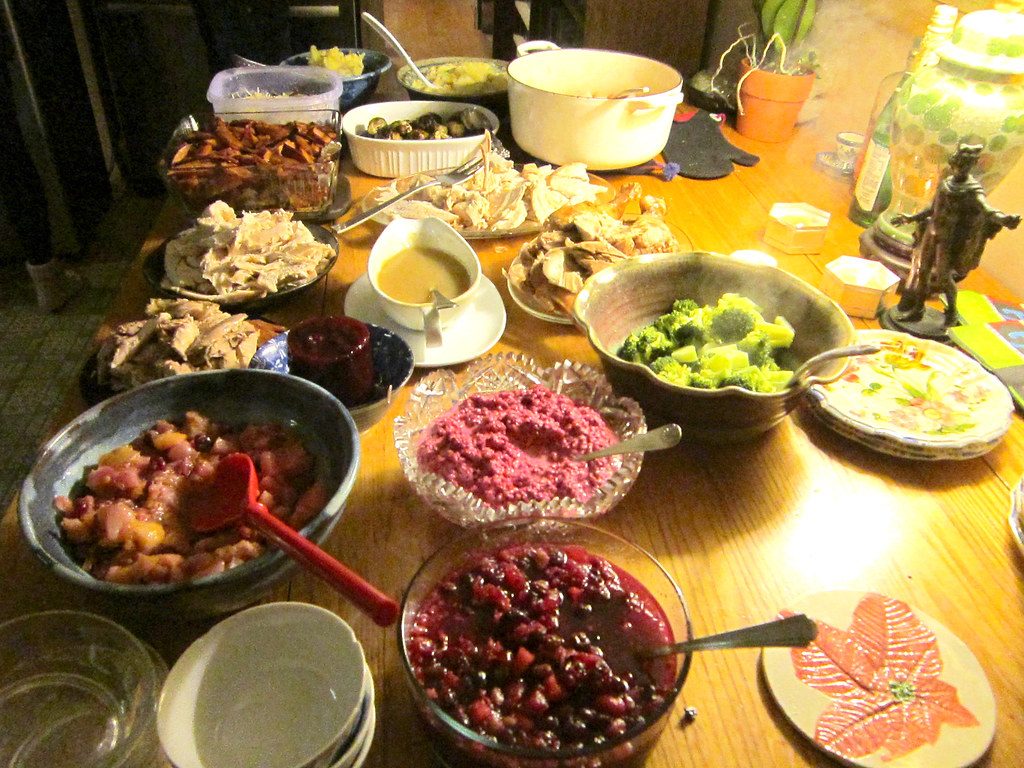
Featured photo: Thanksgiving spread by Selena N. B. H. (moonlightbulb), CC BY 2.0.