Finding accessible restaurants for a group means checking much more than the front door. A place can have a perfect ramp and still have tables that do not fit a wheelchair, an accessible toilet used as a store cupboard, or a dining room too loud for a guest with hearing loss. The reliable approach is to list your group’s specific needs, judge each restaurant against them, and ask direct questions before you book. This guide sets out the criteria that matter most and how to check each one.
Key takeaways
- Start from your guests’ actual needs, not a generic “accessible” label.
- Check the whole route: entrance, table, toilet and exit.
- Ask for table heights and space, not just “do you have wheelchair access”.
- Service animals, quiet seating and clear menus matter too.
Start with your group’s needs
“Accessible” means different things to different people. Before you search, write down what your guests actually need. Common examples:
- Step-free access for a wheelchair, scooter or walking frame.
- Chairs with arms, or a table where someone can stay in their own wheelchair.
- An accessible toilet close to the table.
- A quieter area for guests with hearing loss or sensory sensitivities.
- Space for an assistance dog.
- Large-print, well-lit or easy-to-read menus.
Ask your guests directly, and privately. People know their own needs better than anyone, and many would rather be asked once than have the whole table discuss it.
Criterion 1: the route in and around
The entrance is only the first part of the route. A guest also needs to reach the table, the toilet and the exit. In the United States, the ADA Standards for Accessible Design require restaurants and cafeterias to provide an accessible route to all dining areas, including raised or sunken areas and outdoor areas. Elsewhere the rules differ, and older buildings often fall short, so check in person or by phone.
Questions to ask:
- Is the entrance step-free, or is there a ramp or lift?
- Are any parts of the dining room on a different level?
- Is there an accessible toilet, and is it kept clear?
- How wide are the gaps between tables when the room is full?
Criterion 2: the right table
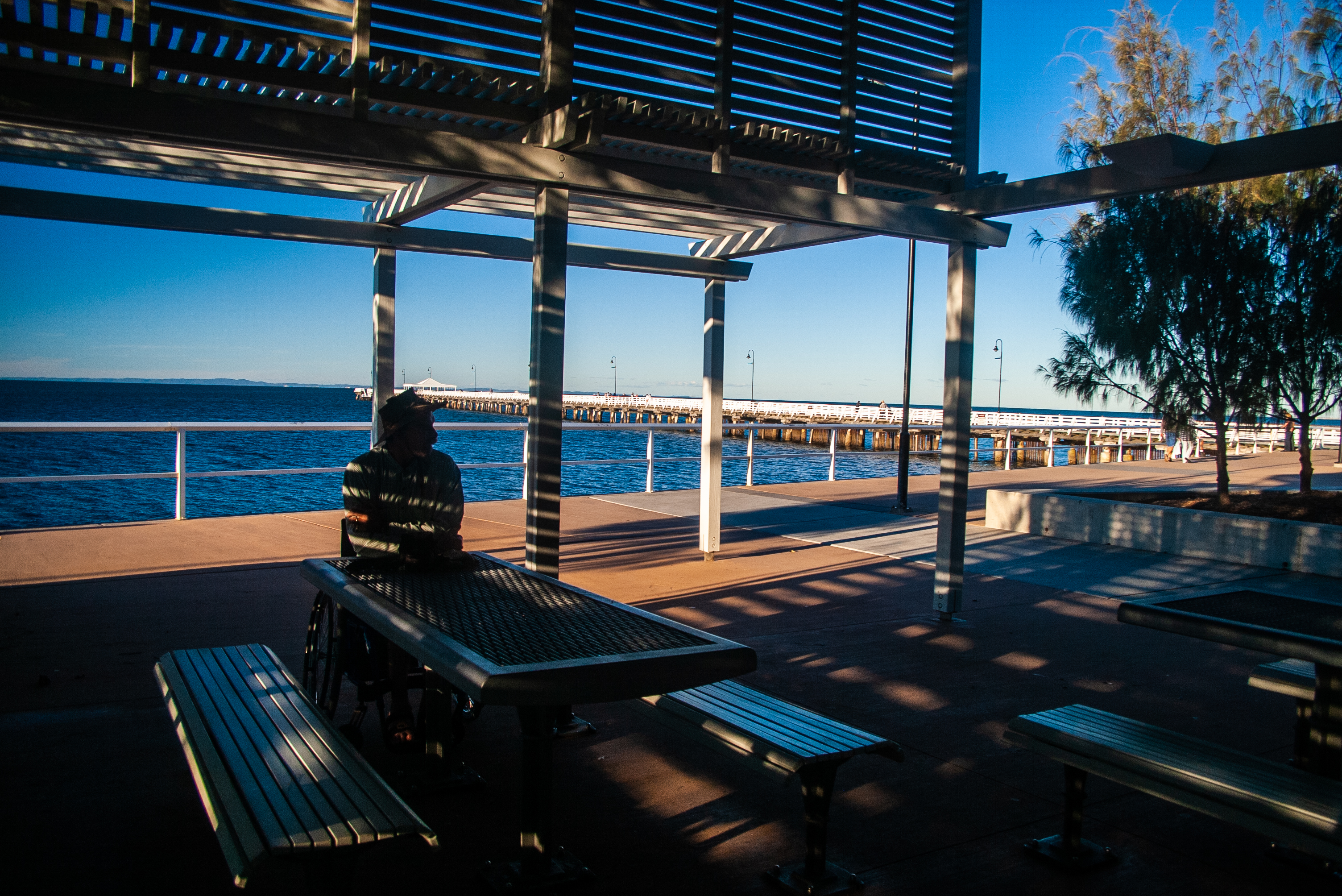
Tables cause more problems than doors. A booth or a high table may be impossible for a wheelchair user, and a table with a central pedestal can block legroom.
The same US standards say that where dining surfaces are provided, at least 5 percent of seating and standing spaces at them must be accessible, and that these accessible spaces must be dispersed throughout the dining area rather than tucked away in one corner. The technical section on dining surfaces sets their height at between 28 and 34 inches above the floor, with clear floor space and knee and toe clearance for someone approaching from the front.
| What to check | Why it matters | What to ask |
|---|---|---|
| Table height | Too high or low is uncomfortable from a wheelchair | What height are your tables? |
| Knee clearance | Pedestals and crossbars block legs and footplates | Do the tables have legs at the corners? |
| Position | Guests should not be seated apart from the group | Can the accessible place be at our main table? |
| Removable chairs | Lets a guest stay in their own chair | Can you take away a chair for us? |
| Space behind | Room to manoeuvre in and out | Is there clear space behind the table? |
For larger groups, the seating plan explainer shows how to place guests with access needs first and build the table around them.
Criterion 3: assistance and service animals
Guests with assistance dogs should be welcomed without fuss. In the United States, the ADA’s guidance on service animals says businesses that serve food generally must allow service animals into public areas even where health codes ban animals, that staff may ask only whether the dog is needed because of a disability and what task it has been trained to do, and that they may not require documentation. People with service animals cannot be isolated from other customers. Check the rules where you are, and mention the dog when you book so a suitable spot is ready.
Criterion 4: noise, light and menus
Physical access is only part of the picture. Consider:
- Noise. Soft furnishings and booths reduce echo; tables away from the kitchen and music help guests with hearing loss.
- Lighting. Very dim rooms make menus hard to read and faces hard to see for lip-reading.
- Menus. Ask whether large-print menus are available, or whether staff can read the menu aloud. A menu published online lets guests read it in advance at their own pace.
- Pace. A booking without a tight time limit lets everyone settle in and leave comfortably.
Our walkthrough on multigenerational dining has more on seating guests with hearing loss and mobility needs at a mixed-age table.
Booking accessible restaurants with confidence
When you have a front-runner, ring rather than booking online, so you can ask everything at once. Note the name of the person you spoke to, and confirm the details in writing. Our guide to booking a large group reservation covers deposits and confirmations for bigger parties.
Frequently asked questions
Can I rely on a restaurant’s website saying it is accessible?
Treat it as a starting point. “Accessible” can mean anything from a ramp at the door to a fully adapted dining room. Ask specific questions about tables, toilets and routes.
What if the only accessible table is apart from the rest of the group?
Ask whether tables can be rearranged so the whole group sits together. If not, look elsewhere; a guest should not be separated from their own party.
Is it better to visit before booking?
If you can, yes. A quick look at the entrance, the route to the toilets and the table layout tells you more than any description.
Choosing your restaurant
List your guests’ needs, shortlist two or three places, and phone each one with the questions above. Choose the one that answers clearly and confidently, not just the one with the nicest menu. For more advice on planning meals for groups, browse our group dining section.