When it comes to kids’ menus and nutrition, the short version is this: children’s menus are convenient and usually good value, but they often lean towards a narrow set of beige favourites with chips and a sugary drink. You do not have to avoid them. Instead, read them with a few questions in mind, swap sides and drinks where you can, and remember that a smaller portion of an adult dish is often the most balanced option on the menu. An occasional treat meal is fine; it is the regular habits that matter.
Here is how to make sense of what you are offered.
Key takeaways
- Children’s menus are often limited; smaller adult portions can be a better choice.
- Swapping chips for vegetables and sugary drinks for water or milk makes a real difference.
- NHS guidance sets daily free sugar limits by age, starting at 14g for 2 to 3 year olds.
- Large chains in England must show calories, but children’s menus are treated slightly differently.
- Treat eating out as part of the week’s diet, not a test you pass or fail.
What is on a typical kids’ menu
Most children’s menus are built around foods that are quick to cook and widely accepted: breaded chicken, fish fingers, sausages, burgers, pizza and plain pasta, usually with chips, and a dessert such as ice cream. They are designed to be safe bets for fussy eaters and quick for the kitchen.
There is nothing wrong with any of these foods occasionally. The issue is repetition. The American Academy of Pediatrics’ family site points out that restaurant meals can be a chance to introduce new foods, but that kids’ menus often offer less healthy choices and can create a narrow ordering habit. It suggests swapping fries for a healthier side, choosing milk instead of fizzy drinks, and letting children try food from the adult menu or your plate.
Kids’ menus and nutrition: what the labels tell you
In England, the rules on calorie labelling in restaurants came into force on 6 April 2022. They apply to businesses with 250 or more employees, which must show the energy content of food in kilocalories, with the portion size it refers to, where customers choose their food. Adult menus must also carry the statement that adults need around 2,000 kcal a day.
Children’s menus are treated slightly differently. According to the government’s implementation guidance on calorie labelling, calorie information is still required for children’s food, but the 2,000 kcal statement is not needed on a menu, or menu page, that lists only children’s food. Smaller independent restaurants are not covered, so many menus you see will not show calories at all.
Calories are only one part of the picture. A dish can be modest in calories but low in vegetables and fibre, so use the numbers as a rough guide rather than the whole story.

Sugar: the part that adds up fastest
Sugary drinks, desserts and sauces are where children’s restaurant meals can quietly overshoot. The NHS sets maximum daily amounts of free sugars, meaning sugars added to food and drink plus those in honey, syrups and fruit juices, at 14g for children aged 2 to 3, 19g for ages 4 to 6 and 24g for ages 7 to 10. Sugars naturally present in milk and whole fruit do not count.
| Age | NHS maximum daily free sugars |
|---|---|
| 1 year | 10g |
| 2 to 3 years | 14g |
| 4 to 6 years | 19g |
| 7 to 10 years | 24g |
| Adults | 30g |
You do not need to calculate grams in a restaurant. The practical takeaway is that a fizzy drink, a juice and a dessert in the same meal can add up quickly, so choose one treat rather than all three.
Simple swaps that work
None of these swaps needs a fuss at the table. Most servers are used to parents asking for vegetables instead of chips or tap water instead of a fizzy drink, and many kitchens can leave a sauce off or serve it on the side. It also helps to let your child stop when they have had enough rather than pushing them to clear the plate; restaurant portions are not always sized for small appetites, and leftovers can usually be boxed up.
- Sides: ask for vegetables, salad or new potatoes instead of chips, or half and half.
- Drinks: water or milk rather than fizzy drinks or juice.
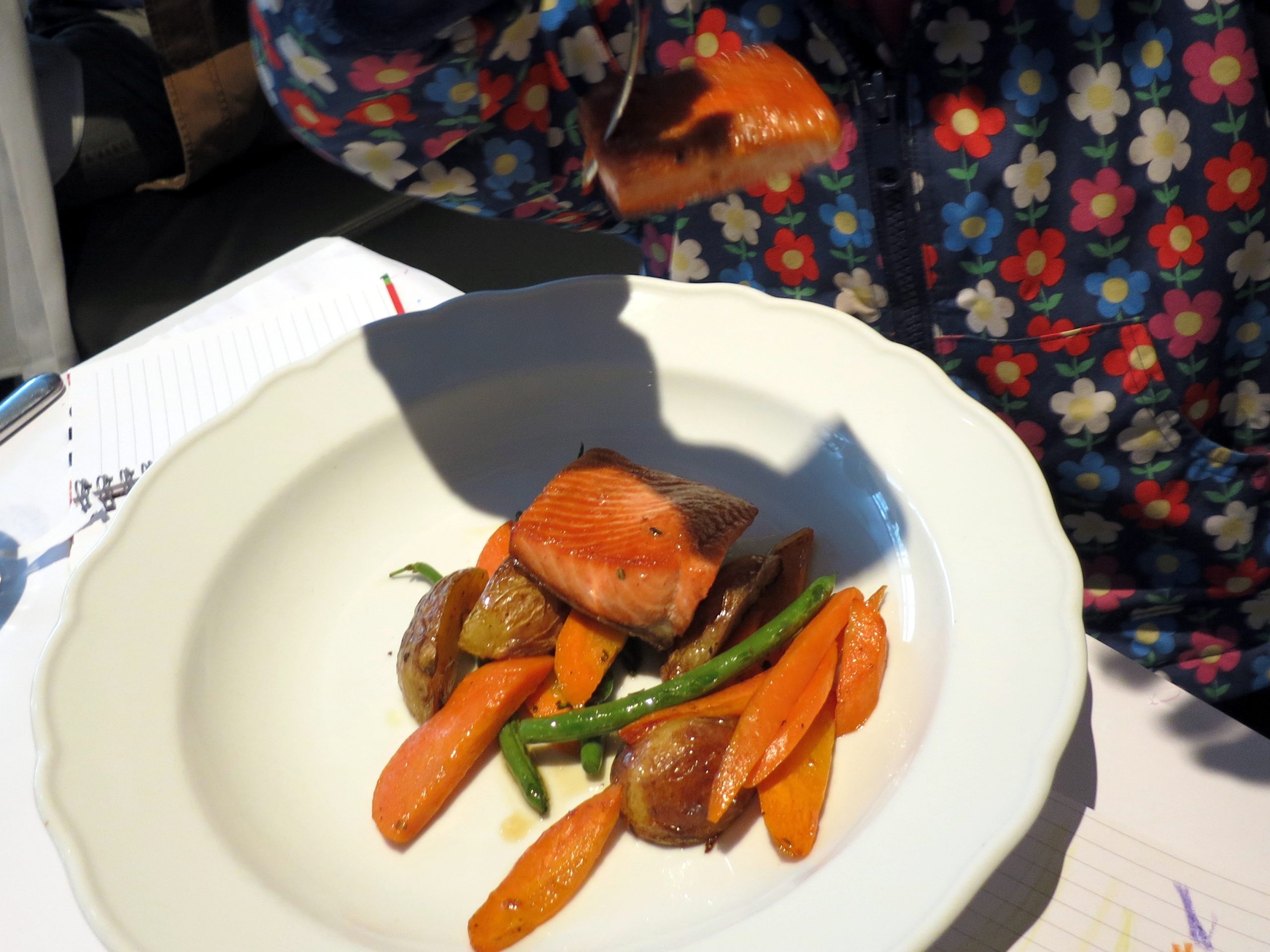
- Portions: a starter or a half portion of an adult main can offer more variety.
- Sharing: let your child try a few bites from your plate. Our comparison of family-style dining and individual plates explains why shared dishes can help children try new foods.
- Dessert: fruit, or a single scoop of ice cream, rather than a large sundae.
Choosing the right place helps too. Our checklist for choosing a family-friendly restaurant includes looking for kitchens that will serve dishes plain or in smaller portions.
Frequently asked questions
Is it fine to order from the kids’ menu every time?
Occasionally, yes. If you eat out often, mixing it up with smaller adult dishes, shared plates and vegetable sides gives your child more variety.
Can I ask for a half portion of an adult meal?
Many restaurants are happy to do this, especially independent ones. It does no harm to ask, and staff are used to the question.
What about very young children?
Toddlers often eat small amounts and are best served simple foods cut up safely. Our step-by-step plan for eating out with a toddler covers portion sizes and cutting food to reduce choking risk.
A balanced approach to eating out
Think about the whole week rather than one meal. If restaurant meals are an occasional treat, enjoy them without worrying. If they are a regular part of family life, a few habits such as vegetable sides, water to drink and one sweet treat rather than several will keep things balanced. For more on eating out with children, explore our Kids & Family guides.